
Skip to content

Freshwater mammals

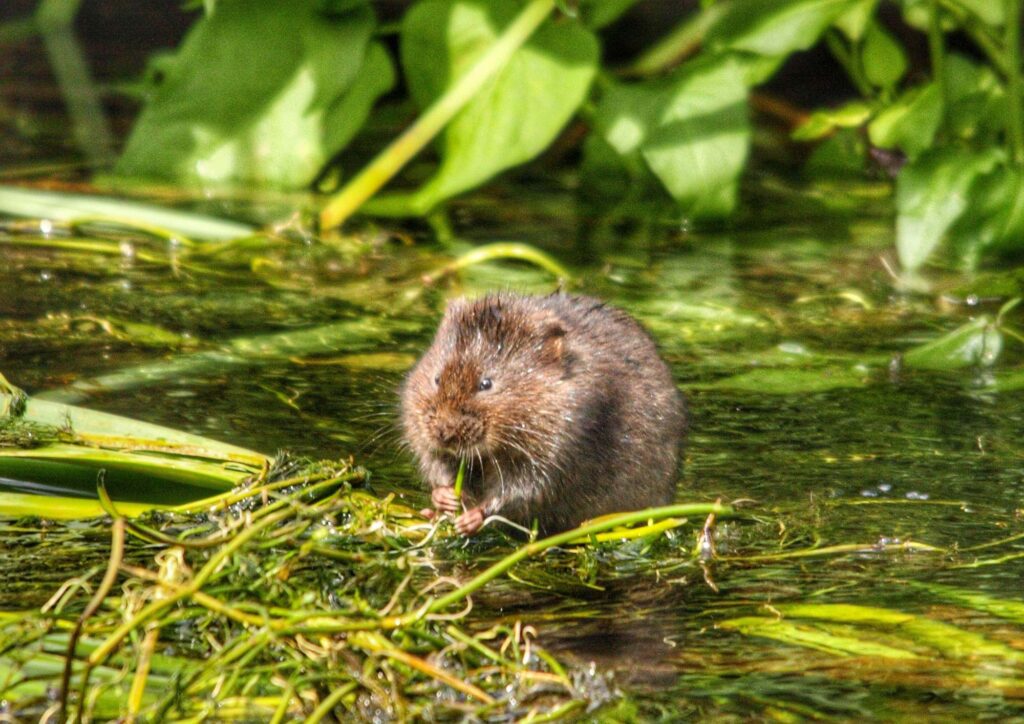
Water Voles have been re-introduced to Devon but are still under threat from American Mink

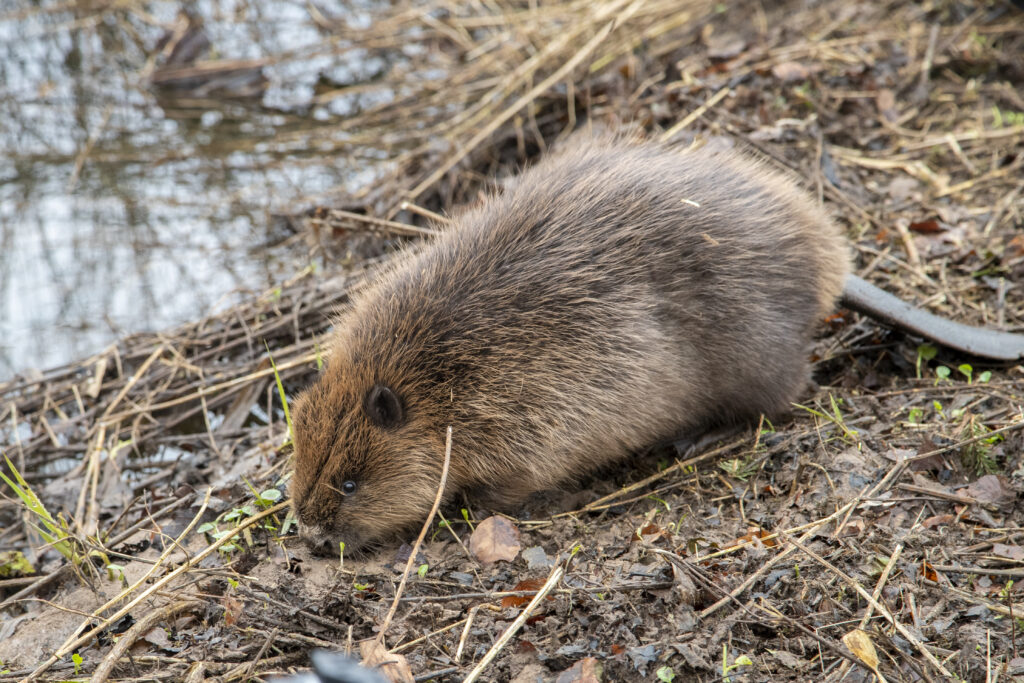
Beavers are now found across large parts of Devon and are creating wetlands that help to  reduce flooding.   

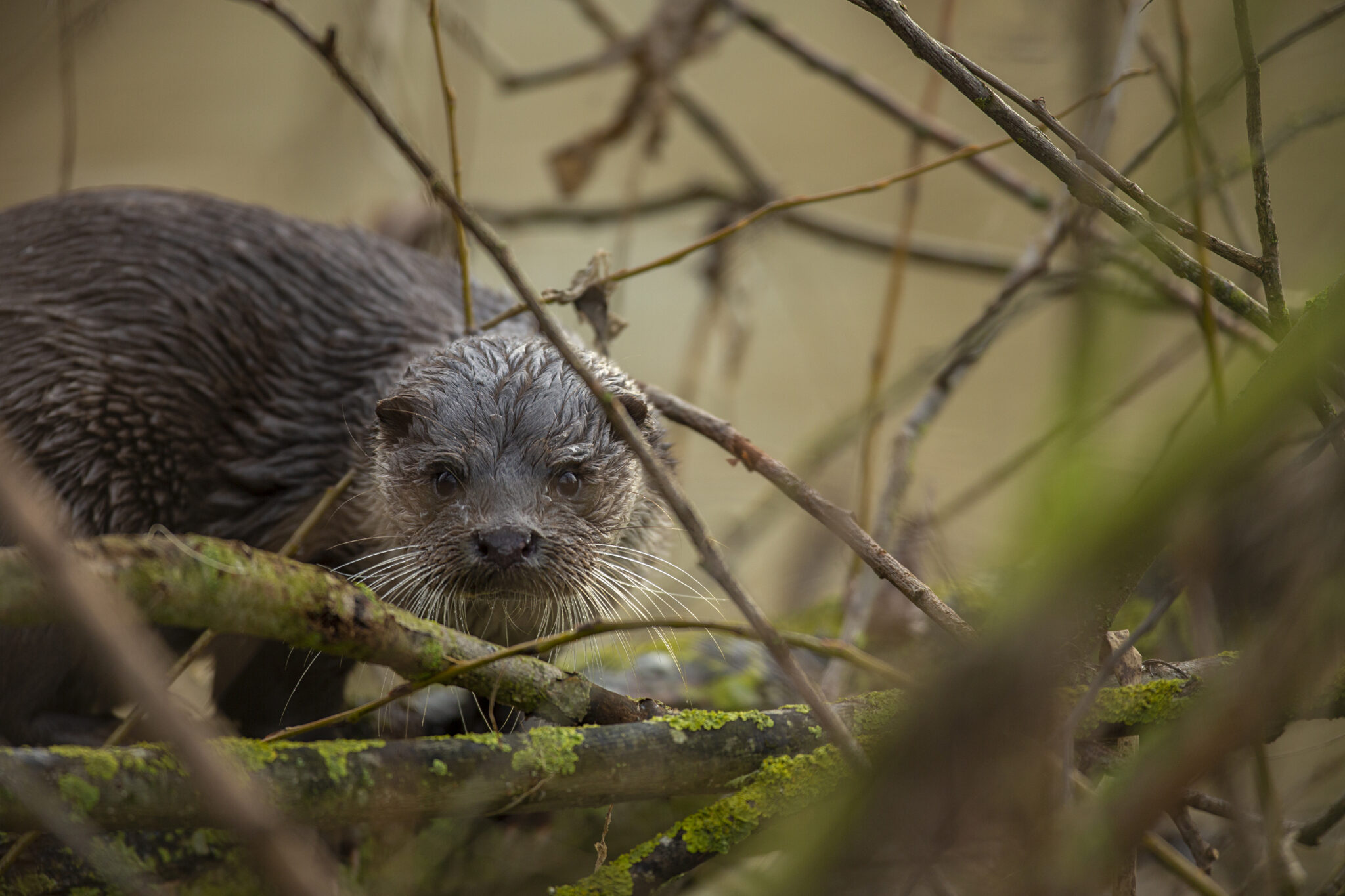
Otters are found across the whole county.

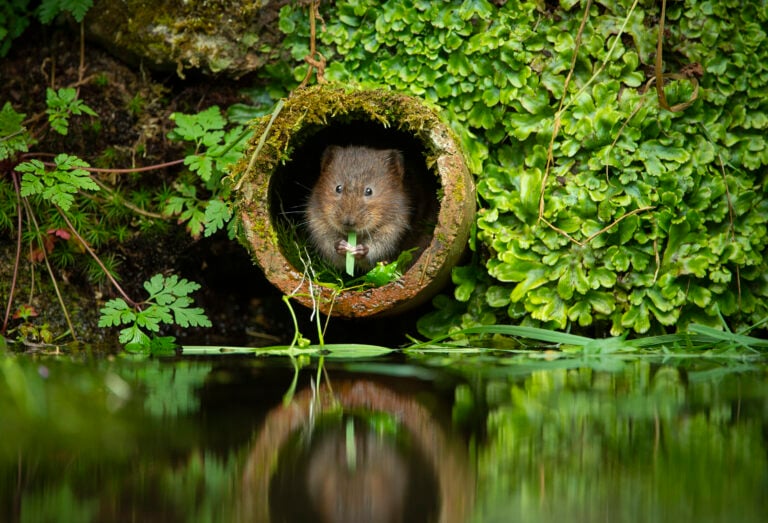
Water vole, Jonathan Ridley

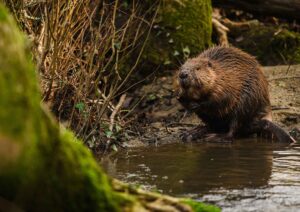
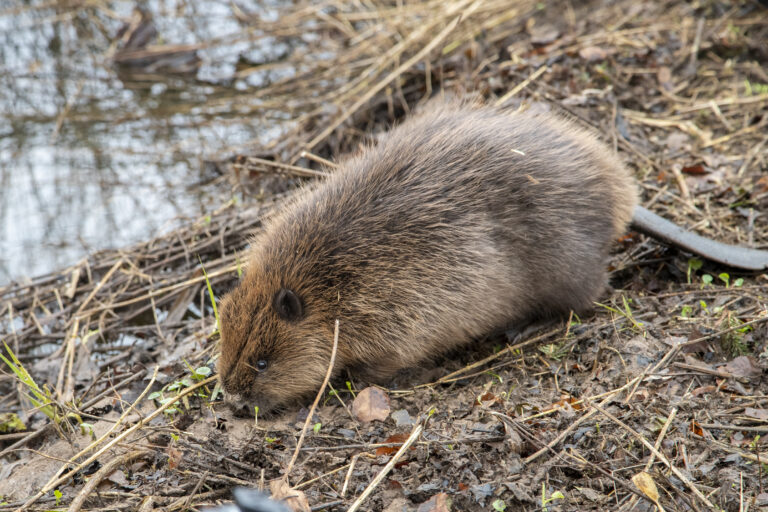
Beaver – Beaver Trust (rspb-images.com)

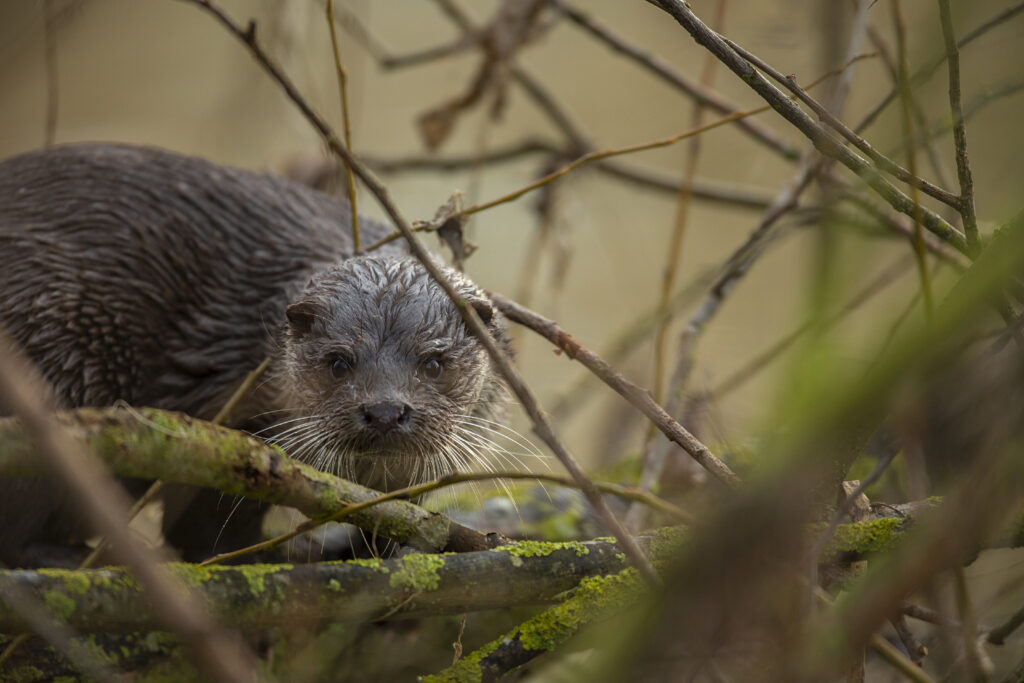
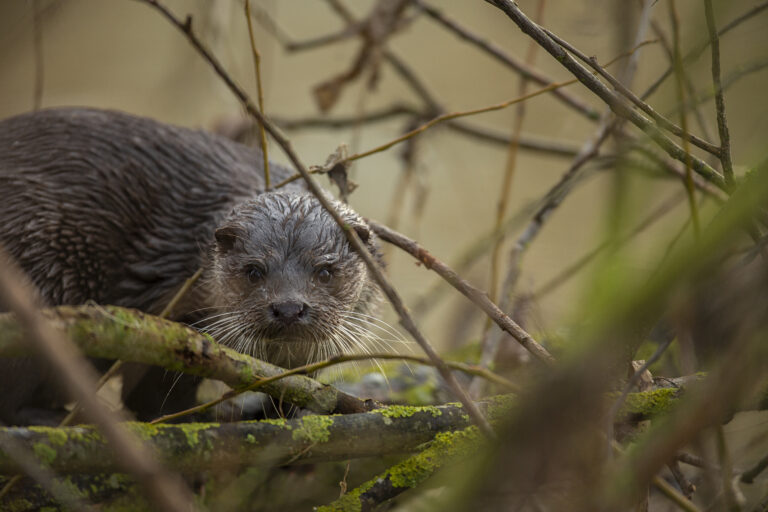
European otter Lutra lutra, adult female hauled out on a tangle of trees by the side of a river, Bedfordshire, January

Otter – Ben.Andrew (rspb-images.com)

1. About

Devon has an extensive network of watercourses, which provide important habitats and connectivity for freshwater mammals such as otters, Water Voles, beavers and Water Shrews. These animals need clean, unpolluted watercourses that support healthy invertebrate and fish populations and that have riverside vegetation which provides shelter, food and breeding sites.

The south-west of the UK has always been a stronghold for otters, even when the population crashed in the 1950s and they went extinct in many English counties.  Today, otters are found on all Devon’s rivers and the population is thought to be healthy. 

Water Voles went extinct in Devon in the early 2000s, but have since been reintroduced to several locations. They’re still threatened by loss of habitat and by American Mink, which can wipe out isolated populations. 

England’s first wild beaver reintroduction project was carried out on the River Otter, and beavers are also present on the Tamar, Taw, and Exe catchments. Beaver dams create wetlands, which help to reduce flooding and provide habitats for other freshwater species such as Water Voles. 

Water Shrews are never very abundant so it’s hard to tell if their populations are under threat. However, they’re known to be numerous in many sites where long-term studies have been conducted.
Key pressures and opportunities

All freshwater mammals need stable riverbanks and a vegetated riparian corridor for food, shelter and breeding sites. However, activities such as heavy grazing by livestock, infrastructure schemes, insensitive river engineering and maintenance works have all caused loss, fragmentation and deterioration of this habitat. 

Ash dieback may also be causing habitat loss by reducing the number of breeding sites available to otters. Ash trees are often large, with hollows under their roots. When the tree dies and falls over, the roots are pulled up and the spaces underneath are lost, which if they’re near rivers could have been used by breeding otters. 

American Mink were first found breeding in the wild on the River Teign in Devon in 1957 and remain widespread. Water Voles are particularly vulnerable to predation by American Mink, which catch them in the water and in their burrows. A female mink with kits to feed can easily wipe out an entire Water Vole colony. 

There are also many invasive non-native plant species that can cause serious damage to rivers by, for example, disrupting the natural flow of a river and/or weakening river banks, causing erosion and silting. Find out more on the Invasive non-native species page.

Otters feed on fish, crustaceans and other invertebrates which may contain heavy metals and toxic chemicals (such as polychlorinated biphenyls) that pollute the water from discharges, sewage and road and agricultural run-off. Some of this pollution can persist in the environment for many years. The otter population in Britain crashed in the 20th century and one of the main reasons was the introduction of organochlorine pesticides. Otter populations have now recovered but are still vulnerable to pollution. 

Species such as European Eels and Bullheads are an important food source for otters and both are affected by pollution. Eels are now endangered (see Fish for more information). No Devon rivers are classed as being in Good Chemical Status or High Environmental Status and less than a quarter are in Good Environmental Status. See Watercourse corridors for more information.    

Road traffic is now one of the biggest dangers for otters, and may become a danger for beavers as their population expands across Devon. Otters and beavers are at most risk when moving between river catchments or during high flows when they can’t pass through bridges and culverts and are forced up onto roads.

The Environment Agency estimates that, on average, one otter is killed on Devon and Cornwall’s roads every month. Crossings have been put in place at some of the known black spots on the M5, A361, A30 and A38, but these need to be monitored and more are needed.

Fyke nets (fish traps used in shallow coastal waters) and crayfish traps can drown otters if they aren’t set with an otter guard.

There’s been an increase in reports of otters feeding at fish farms and fishing lakes. Advice is available from the Environment Agency and the Angling Trust to help protect fish stocks. 

There’s currently no strategic approach to the conservation of Water Voles across Devon. For example, organisations such as the Environment Agency and local authorities are unable to help with conservation efforts because they’re not being told where and when the voles are released. There’s no countywide group for beavers. There’s a need for a more strategic approach to conservation efforts for all three species in this freshwater mammals group.

There are lots of projects underway across Devon that will enhance habitat for freshwater mammals, including work by Devon Wildlife Trust and others on beavers, community projects to re-introduce beavers, Landscape Recovery Projects and Natural Flood Management projects such as the Dartmoor Headwaters Project. See the Watercourse corridors page for an overview. See Inspiration and Find out more below for more information.    

Beavers are ecosystem engineers. Their dams slow the flow of water and create wetland habitats. Benefits include a reduced risk of flooding downstream, better water quality, enhanced wildlife and more resilient water supplies. Exeter University is developing a model to predict the benefits of beavers moving into a catchment. There are opportunities to link these benefits to funding for beaver conservation projects.

Community groups are leading more and more projects, for example to restore rivers, release and monitor voles and control mink.  

Communities are also involved in lobbying and increasing the pressure on water companies to improve water quality and the health of our rivers. 

2. What we need to do and where

Devon Special Species

See Find out more below for links to more detailed information on this group including management advice and records.

European otter Lutra lutra, adult female hauled out on a tangle of trees by the side of a river, Bedfordshire, January

Otter

Lutra lutra

Otters are one of Britain’s largest carnivores. They’re solitary mammals and their territories can cover up to 20kms of riverbank. They mark their territory with faeces (spraint), which can be found in prominent places such as on rocks.

Otters live in both coastal and freshwaters. They create dens (known as holts) in riverbanks, generally in tree root systems, holes or under rocks. They mainly eat salmonid fish, eels and crayfish although they sometimes eat birds such as coots and ducks and, in the spring, frogs and toads. They need clean rivers with an abundant, varied supply of food, plenty of bank-side vegetation to provide cover for lying up during the day and secluded sites for holts. Wetlands provide an important habitat for raising their young as well as frogs and toads for food. Otters breed all year.

The otter population in Britain and western Europe declined dramatically between the mid-1950s and the mid-1970s. This was largely due to the introduction of organochlorine pesticides but also due to habitat loss and hunting. In the 1977-81 national survey, signs of otter were only found in 6% of sites in England. Since then the population has slowly recovered due to the ban of organo-chlorine pesticides, legal protection in 1978 and better water quality.  

Otters are found on all Devon’s rivers and the population is thought to be healthy. However, as they remain vulnerable to impacts such as pollution, and as Devon is a national stronghold, the Environment Agency has said they should be a Focus Species in the LNRS. They are a UK Priority Species, are legally protected and also a qualifying feature of the Dartmoor SAC.

Beaver

Castor fiber

Beavers are Britain’s largest rodent. They live in freshwater habitats such as rivers, streams and ponds, preferring areas that are surrounded by woodland. Their river territories are around 3 kms.  

Beavers dig burrows (known as lodges), which have their entrance below water level. They live in family groups of an adult pair and their offspring. Between one and six young, called kits, are born between May and June. They leave when they’re around two years old to set up a new territory. 

Like Water Voles, beavers are herbivores. In winter they eat tree bark and in Devon favour willow, poplar, hazel and birch. In summer they eat a wide range of non-woody vegetation. In autumn they sometimes create a food reserve of branches and twigs, which they store underwater close to the entrance of their lodge. 

Beavers are great swimmers but slow on land so they prefer to be near water that’s at least 70 cms deep. They’re known as ecosystem engineers because they build dams of mud, wood, plant material and stones across shallow watercourses and ditches to create deep ponds. They also build bunds across fields to create new ponds and canals to help them move vegetation back to their lodge.

Beavers were once widespread across Britain but by the end of the 16th century had been hunted to extinction. However, since 2000, there have been official and unofficial beaver releases  across the country. In 2013, beavers were seen on the River Otter in Devon (see Inspiration below) and there are now wild beavers in the Otter, Tamar, Taw and Exe catchments.

Beavers’ engineering works have many benefits. They create habitats for a wide range of other species, including Water Voles. New wetlands slow the flow of water and can help to prevent flooding downstream, as well as acting as a buffer to watercourses and improving water quality. While this will benefit fish populations, there are concerns that dams may create barriers and prevent fish such as shad (see Fish) from reaching critical spawning grounds. There are also potential conflicts with landowners and highways as beavers can flood land and fell trees across roads.

A water vole nibbles on a green leaf from inside a terracotta pipe that sticks out of a lush green riverbank, just above the water.

Water Vole

Arvicola amphibius

Water Voles are our largest voles. They mainly live along well-vegetated banks of slow flowing rivers, ditches and lakes (and sometimes reed beds and marshes) where they have cover from predators and can feed on a wide range of vegetation. They have a territory of around 130 m along the banks and are thought to travel up to 3 km to establish new territories.

Water Voles dig extensive burrow systems in banks with entrances above and below the water. They can also make aerial nests in wetlands when there are no banks to burrow into. They usually have three or four litters a year. 

Unlike many other British mammals, Water Voles tend to be active during the day. Signs that they’re present include closely grazed ‘lawns’, sometimes with piles of chopped food near the burrow entrance, a characteristic ‘plop’ when they enter the water and deposits of distinctive shiny black faeces. 

During the 1980s and 1990s, the once widespread Water Vole population declined by 90%. This was partly due to loss of habitat but was mainly because of predation by American Mink. Water Voles are classed as endangered, are a UK Priority species and are legally protected. In Devon they were declared extinct in 2002 and various reintroductions are taking place across the county. 

Actions

Manage and restore healthy watercourse corridors with well vegetated banks, wetlands and woodlands.

See the Watercourse corridors page for actions relating to water quality and restoring a wildlife-rich riparian zone. 

Develop safe road crossings for wildlife.

  • Ensure that bridges and culverts include a ledge which is designed for mammals to use at times of high flow. Where this isn’t possible use dry underpasses.
  • Use information from Highways England and the Environment Agency to identify priority areas for developing safe crossings.
  • Statutory bodies to ensure that any relevant flood and land drainage consents and planning permissions meet national design standards for wildlife road crossings.

Re-introduce Water Voles to suitable habitat across Devon and support the expansion of beaver populations, aiming for healthy populations in all Devon catchments.

  • Continue to reintroduce Water Voles where habitat is suitable and mink control measures are in place.
  • Continue to develop a strategic approach to mink control in Devon and surrounding counties building on learning from the Norfolk and Suffolk eradication programme. Include mink control (trapping) in all Water Vole reintroduction projects across Devon. Also see the Invasive non-native species page. 

Research, survey and collaboration

  • Set up a countywide group to share information, identify and agree priorities and take a strategic approach for beavers and Water Voles (bringing together the different beaver management groups). Continue to raise awareness of the needs of riparian mammals and the actions needed to support them with all relevant sectors, in particular landowners, anglers, river users and relevant communities.
  • Support existing and create new monitoring programmes, such as Operation Otter. Share records with Devon Biodiversity Record Centre (DBRC).
  • Continue beaver research, such as beaver dam capacity models.
  • Continue to support otter post-mortems and eco-toxicological analysis of otter corpses, such as that carried out by Cardiff University’s Otter Project. 

All freshwater mammals will benefit from the actions listed above and actions set out in the Habitat pages. Links to key habitats and other relevant species are given below.

Where to focus action

High Opportunity Areas: Watercourse corridors across Devon. See Mapping for the LNRS Viewer and information on how areas have been mapped.

Otters are widespread and actions are needed on all watercourses. Mink control also needs to take place across Devon and ideally the south-west peninsula.

Actions for existing Water Vole and beaver populations should be guided by the Species Opportunity Areas. The Water Vole zones show where Water Voles are likely to occur based on re-introductions. Beaver catchments show the catchments which currently support beavers (Otter, Tamar, Taw and Exe). The other beaver layers show riparian habitat which has been mapped as ‘good’ or ‘poor’ for beavers. Actions to restore riparian corridors should be targeted at the ‘poor’ areas.

3. Inspiration

Case studies

Green Minds Beaver Project – Plymouth

The Green Minds initiative, led by Plymouth City Council, reintroduced Eurasian Beavers into an urban setting in 2020 under licence from Natural England – the UK’s first urban beaver reintroduction. A 7 ha enclosure at Poole Farm in Derriford Community Park tests nature-based solutions for water management, biodiversity, wellbeing and climate resilience.

A pair of orphaned beavers from Scotland’s Tay Catchment, now thriving with their kit, are reshaping the landscape by building dams, ponds and wetlands, restoring rich wet woodland. Monitoring by Exeter University shows their activity has reduced Bircham river flood peaks by 23%.

The beavers are central to Poole Farm’s Community, Wellbeing and Education programmes, including an Ecotherapy scheme with Plymouth City Council and Livewell, which supports mental health through connection with nature. The project is backed by the Plymouth Beaver Board: Plymouth City Council, Beaver Trust, Devon Wildlife Trust, Natural England, Environment Agency, the University of Plymouth, the University of Exeter and Derek Gow Consultancy.

Beaver perched at the side of a river, right on the waters edge.

If you’re doing something to help nature thrive, please share it on the Devon Nature Recovery Delivery Map to inspire others to take action.

Where to visit

Always follow the Countryside Code and keep to footpaths and sites that are managed for public access. 

Seaton Wetlands

This is an area of freshwater grazing marsh, salt marshes and a tidal lagoon managed by East Devon District Council as a Local Nature Reserve on the lower Axe Estuary. A population of Water Voles was reintroduced here and continues to thrive in the network of ponds, ditches and streams.

This 58-acre site supports freshwater mammals and is an important migratory spot for birds. In 2025, an Osprey nesting platform was installed in partnership with the Devon Osprey Project, in the hope that one day this iconic wetland bird of prey might become a breeding species. You can read more about the birds on the Estuarine birds page.

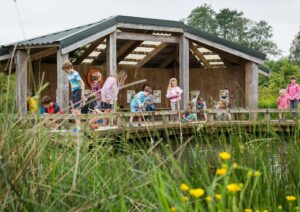
A group of children exploring part of Seaton Wetlands.

River Otter

Beavers are frequently spotted along the lower half River Otter and there are many walks that include sections of the river. This is also an excellent place to see some fantastic bird species.

However, if you’d like to learn more about beavers and the other wildlife in the area, you can join a walk led by Devon Beaver and Wildlife Tours, based near Budleigh Salterton.

For information on visiting these and other sites that are open to the public please see the Explore Devon website.

4. Find out more

The NBN Atlas has species records and a search function that pulls up records for a specific area. Health warning: The Atlas shows records submitted and not the actual distribution of species. Therefore absence on the map does not mean absence. Some of the records are also quite old and the species may no longer be present. 

Devon Biodiversity Records Centre (DBRC) collects, manages and makes available records of wildlife. Note: they may charge depending on the reason for the request.

iNaturalistUK helps you identify wildlife and share records.

Riparian habitat management

The Forestry Commission has a design guide on woodland design for nature recovery, including water benefits.

The Forestry Commission has a practice guide on Creating and managing riparian woodland.

Natural Scotland and the Scottish Environment Protection Agency have produced a good practice guide on river crossings.  

The Water Vole website has information on Water Voles.
The People’s Trust for Endangered Species is inviting people to register as water vole surveyors and take part in the national water vole monitoring programme.

The Wildlife Trusts lead the National Water Vole Database and Mapping Project, which brings together and maps data on water voles and American Mink.
The Game and Wildlife Conservation Trust has information on how to build and use a mink raft.

Known Water Vole reintroductions in Devon – need to check and sort out links or delete them

Dawlish Warren and Starcross (2009): still present in the area. 
Tale Valley Trust (2004-2006) (NEW LINK NEEDED)
Lower Axe Valley, (including Seaton Wetlands) and the River Tale, River Coly and Offwell Brook (2008-2011): run by the Devon Water Vole Recovery Project, the project also carried out mink control and gave advice to landowners. Water Voles are still present on the River Tale and at Seaton Wetlands, though it’s not known if they are still present at some of the other sites.  

Positive coexistence of Water Voles and beaver: Water Vole expansion in a beaver engineered wetland — Mammal Society

Seaton Wetlands (2017-present): Water Voles were released in 2017 and 2018 to bolster the population released in 2008   
River Gara (2023): project run by the Habitat Group.
Hayes Meadow, Exbourne (2021)
Avon Valley (2020-2021): run by the South Devon Water Vole Project.  Water Voles were originally reintroduced to Devon Birds’ South Huish Nature Reserve in 2010. Local volunteers were trained to survey for Water Voles, and new locations were found in the Avon Valley, some distance from the original release site.
Essebere Farm, Witheridge (2020): project run bythe Dayshul Brake rewilding project, which has also released beavers.
Braunton Marshes: a release is being planned.

Natural England have published the Ecology of the European Otter, by Paul Chanin

In 2011, The Guardian published an article, Otters are back – in every county in England

Data

The Environment Agency published the Fifth Otter Survey of England 2009-2010

Operation Otter is a volunteer-led, quarterly otter survey which takes place across Devon. The survey has been running since 1997, however a lack of funding means it has been difficult train new volunteers and few sites are surveyed now. 

Contact DBRC for data from surveys in East Dartmoor NNR, Exeter, Exmoor and the Axe Valley.

The Environment Agency records otter roadkills and sends data from corpses to the Cardiff University Otter Project for post-mortem (see Research below). 

Research

Cardiff University’s Otter Project is a long-term environmental surveillance scheme that uses otters found dead to investigate contaminants, disease and population biology across the UK. The data the project gathers on certain bioaccumulating toxic chemicals in otter tissue will be used by the Environment Agency as part of the environmental monitoring programme for toxic pollutants under the Government’s Environmental Improvement Plan. Link?

West Dart River Valley between Two Bridges and Hexworthy is the only area of the Countryside and Rights of Way (CROW) Act Access Land where dogs were completely excluded all year around to protect otters. This exclusion was reviewed in 2018, and dogs are now allowed, but must be kept on a lead. 

Legal protection

A European Protected Species mitigation licence is required if any work is carried out within 30m of an otter holt or lying up site.

Devon Wildlife Trust’s website has lots of information about beavers, including a report on the River Otter Beaver Trial.

The East Devon Beaver Management Group oversees responses to wild beaver activity in catchments in the East Devon area.

The Tamar Beaver Management Group oversees reponses to wild beaver activity in catchments in the whole Tamar River catchment.

The Mammal Society website, The Wildlife Trusts website and the Beaver Trust’s website all have information on beavers.

In 2021, the Natural History Museum published an article, Record numbers of beavers are being introduced to the UK.

Beaver Management has information and advice on how we can successfully live alongside beavers.

GOV.UK has information on how to manage beavers in England.

Devon Wildlife Trust has information on how to build a network of nature-rich rivers and wetlands where beavers and other wildlife can flourish.

The University of Exeter has published research into predicting the location and number of beaver dams.

Beaver releases

Beavers have also been released into a fenced enclosure at Upcott Grange, Lifton as part of the Coombeshead rewilding project and on the Little Dart, near Witheridge, as part of the Dayshul Brake rewilding project. There is also a new release planned for a site on Dartmoor in 2023. 

  • Otter – Ben Andrew (rspb-images.com)
  • Beaver – Beaver Trust (rspb-images.com)
  • Water Vole – Ben.Andrew (rspb-images.com)
  • Female beaver release – Chris Parkes photo
  • Seaton Wetlands – James Chubb
  • Beaver – Beaver Trust (rspb-images.com)

Draft